

Florida Realtor Business Card Rules for 2026
A Florida real estate card can tell you a lot in five seconds. If it leaves out the brokerage name, uses a strange title, or feels vague, that's a warning sign.
Florida referral agent business cards follow the same core disclosure rules, so the same red flags apply. A card is more than paper. It shows whether an agent pays attention to the basics and respects your time.
If you're trying to find a trusted real estate agent, start with the card, then look at the person behind it. The difference between polished and careless is often easy to spot once you know what to check.
What Florida business cards must show in 2026
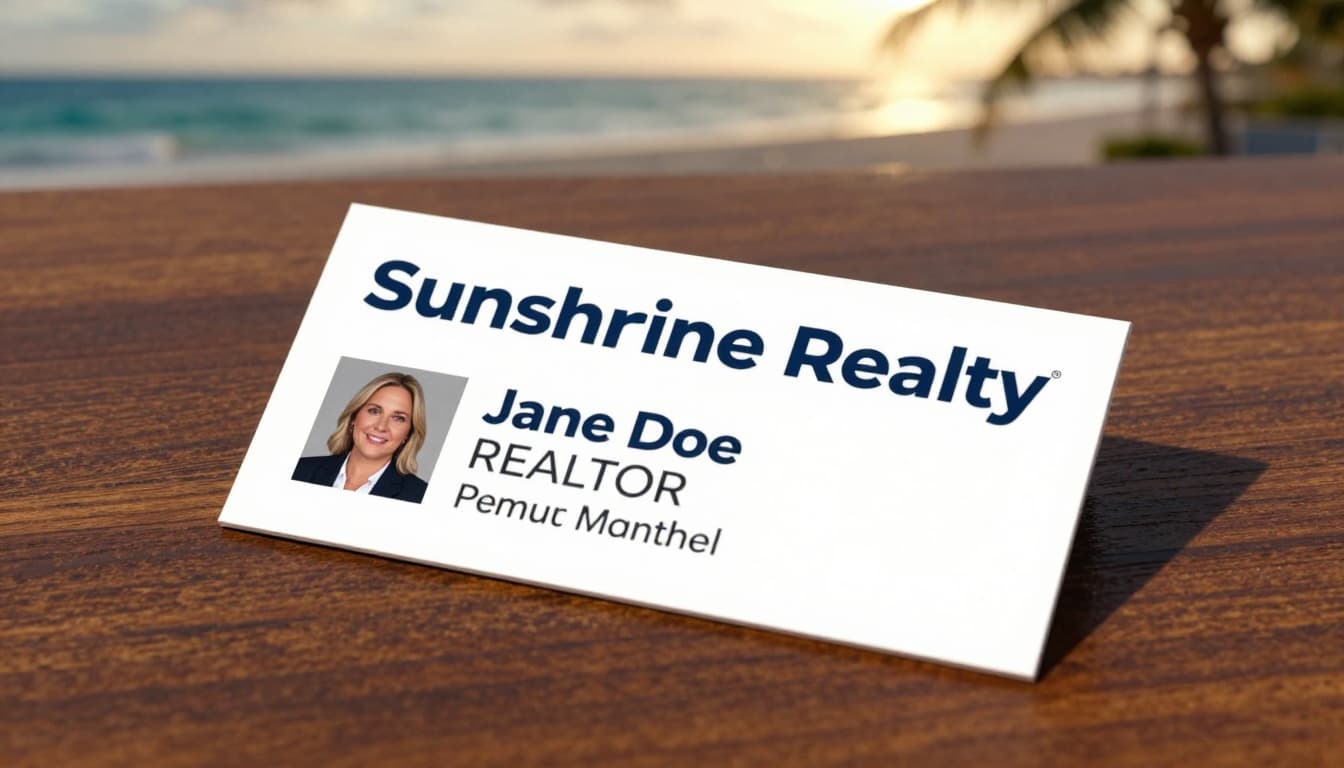
Florida advertising rules still treat a business card as real estate advertising. That means the card must make it clear that you're dealing with a licensed real estate professional. The brokerage name needs to appear, and the agent's name should match the way it's registered.
A nickname can appear, but it can't replace the legal name. If the card says "Bob" or "Kathy," the registered name still needs to be there. That small detail says a lot about how carefully the agent handles compliance.
Here's a quick way to read a card at a glance:
| Card detail | Good sign | Bad sign |
|---|---|---|
| Brokerage name | Clear and easy to spot | Missing, tiny, or shortened beyond recognition |
| Agent name | Matches the licensed name | Looks made up or incomplete |
| Nickname | Paired with the legal name | Used alone without the official name |
| Title | Honest and accurate | Inflated or misleading |
| Contact info | Current phone, email, or website | Dead number or outdated page |
A business card should make the brokerage relationship obvious right away.
The takeaway is simple. A clean, legal card doesn't make someone a great agent, but a sloppy card can expose a careless one fast.
Signs of a trusted real estate agent
A trusted real estate agent usually keeps the card clear and the story consistent. The card, website, and email signature should all say the same thing. If one of them feels off, pay attention.
Good agents usually look calm on paper. They don't crowd the card with claims they can't prove. Instead, they focus on the basics, such as name, brokerage, phone, email, and maybe a website or service area.
That consistency matters because it carries into the relationship. An agent who can't keep a card accurate may not be great at keeping deadlines, documents, or promises straight.
A strong card often points to a strong work habit. The best agents tend to value:
- Clear contact details that still work.
- A name that matches the license and the website.
- Honest titles that don't stretch the truth.
- A design that feels professional without trying too hard.
A card does not need fancy finishes to earn trust. It needs to be easy to read and easy to verify.
Red flags that point to a bad agent
Bad cards usually fail in the same few ways. Some are messy. Some are misleading. Some are plain outdated.
Watch for these signs:
- The brokerage name is missing or hidden in tiny print.
- The name on the card doesn't match the name on the license.
- The title sounds impressive but vague, like it was picked to impress rather than inform.
- The contact information leads nowhere, or takes forever to answer.
- The card uses a nickname alone, with no legal name beside it.
- The design leans more on hype than facts.
A card like that does not prove someone is a bad agent, but it gives you a reason to slow down. Good agents want you to know who they are. Bad ones often hope you won't look too closely.
The same is true online. If the card looks polished but the website feels inconsistent, that gap matters. The best real estate agents keep their details straight everywhere.
Questions that matter more than the design
Once the card passes the first test, ask simple questions. A good realtor answers them without drama. A weak one dodges, stalls, or talks around the point.
Start with a few basics:
- How long have you worked in this area?
- How many buyers or sellers have you helped this year?
- How do you handle calls, texts, and contract updates?
- What happens if a problem comes up during the deal?
These questions show how the agent works, not how they market. A great card with poor answers is still a bad sign. A plain card with clear answers is often better.
If your search still feels stuck, Find a Trusted Agent can help you connect with a vetted professional who fits your needs.
The point is to look for steadiness. You want someone who answers directly, explains clearly, and keeps their information clean.
Comparing two agents side by side
When you have two cards in hand, compare the details, not the style. One card may look flashy, but the other may be easier to trust.
| Area | Better agent | Worse agent |
|---|---|---|
| Card details | Clear, complete, and accurate | Missing key information |
| Online match | Same name and brokerage everywhere | Different names or old listings |
| Communication | Direct and calm | Vague and hard to reach |
| Professional tone | Honest and simple | Pushy or full of hype |
The better choice is usually the one that stays consistent. Good agents do not need confusion to get attention. They use clear facts, and they back them up with their work.
That makes your decision easier. Once you see the same steady pattern in the card, the website, and the conversation, you're probably looking at someone worth trusting.
Conclusion
A Florida business card can reveal a lot before the first phone call. In 2026, the most important signs are still the simplest ones, clear brokerage information, an accurate name, and honest contact details.
A trusted real estate agent makes those details easy to verify. A bad one leaves you guessing. If the card feels off, the working relationship may feel off too.
The safest approach is to check the card, ask direct questions, and look for consistency everywhere. That small habit can save you from a lot of regret later.
Recent Posts